Bristol
Cars
A
little known fact is that the bodywork for some Bristol cars was built at Park
Royal. I personally recall seeing Bristol body panels being hand-beaten
around timber jigs. I remember being impressed by the demonstrable skill
of the panel-beater.
Very
little information is available to support this fact and it seems that, whilst other
designers/coachbuilders are mentioned in association with Bristol cars, PRV
almost never
is; that is until I found an entry below from the Bristol
Owners' Club of Australia where one, rightfully proud, owner seems keen
to divulge that their Bristol Type 408 was indeed coach-built at Park
Royal (Click
here for the link to the page).
Only
83 cars of that model were made between 1963 & 66 and it appears that at
least 64 of these Chrysler-engined 408's were built at PRV. I believe my
recollections are pre-1963 and if so it would have been the model 407,
production of which began at PRV in 1961. Perhaps a reader can advise me
more detail.
But
it is evident that PRV's association with Bristol Motors stretched into the 70's
as Brian Wilson has kindly supplied me with a number of documents, dated through
1974 & 75, that clearly show PRV building at least 68 of the 287 model 411
cars that were produced between 1969 and 1976 (but it was not just the bodywork
as other memos discuss the procurement of leather for the upholstery).
I
quote an extract from one of the internal memos:
|
Works
Instruction |
|
| From Sales
Department |
|
Dated: 5-12-74 |
| -------------------------------------------------------------------------------------- |
| Job
Number |
:
B.61516-61583 |
|
| Instruction
No |
: 5 |
|
| Customer
|
: Bristol Cars |
|
| Contract No. |
: 99138 |
|
| -------------------------------------------------------------------------------------- |
|
43
of the above Cars will be completed in accordance with the Works
instruction already issued.
The
remaining 25 Cars will be built to a reduced state of completion
consisting basically of framework mounted to the chassis but without roof
and rear end and without any skin.
Seats
trimming and electrical work are also excluded. A detailed schedule of the
items to be included is held by Mr. Thomas.
Both
kinds of body will be built concurrently. |
|
To
facilitate record-keeping the body numbers will be utilised as follows:-
B.61516-61558
43 'Skinned' bodies as already called for.
B.61559-61583
25 'Frame Only' bodies. |
| The
chassis for the two types are not interchangeable. |
Note
the typical use of the "B" prefix on PRV body numbers.
Brian
recalls the rolling chassis (six at a time) being brought up from Bristol on
a double decked trailer pulled by a Land Rover; the full
rolling shells being taken away on trailers. The part cars mentioned in the
Works Instruction above were as a result of the work phasing out.
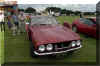
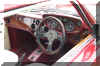 Pictured here, in excellent
condition, at the 2007 Helston
Motor Show, Cornwall, is a Bristol 411 (Series 3) that was coachbuilt
at Park Royal and dispatched from the Filton factory on the 9th February 1973 bound
for the London dealership. This particular vehicle was once
owned by the actor Trevor Howard who apparently had several of the marque.
Pictured here, in excellent
condition, at the 2007 Helston
Motor Show, Cornwall, is a Bristol 411 (Series 3) that was coachbuilt
at Park Royal and dispatched from the Filton factory on the 9th February 1973 bound
for the London dealership. This particular vehicle was once
owned by the actor Trevor Howard who apparently had several of the marque.
Sadly in 2024, she was damaged in a fire, but it's understood that someone has bought
her from the scrap dealer; presumably with the intention of restoration.
(Additional information courtesy Brian Ridley-Jones.)
(Perhaps the new owner would kindly keep us informed of progress? Ed.)
I
am grateful to Thomas Schaumann who has kindly given the following information:
Other references to the Park Royal bodied Bristol cars can be found on the German
Wikipedia page (http://de.wikipedia.org/wiki/Bristol_407)
that states that the 407 was the first Bristol having a Park Royal body. Although it
used the same basic design as the Bristol 406, the 406 had a Bristol designed body and
was (as much as I know) Bristol built - see note by Nick Challacombe
below - (the Bristol "design" might be the reason, not to
mention that the later cars were Park Royal bodied¹). Park Royal bodies
were used up to the Bristol 411, all of them using basically the Bristol 406 design. To my knowledge,
almost all Bristol 407–411 vehicles were bodied by Park Royal; although I’m aware of
three exceptions: the 407 Viotti (1960), the 407 GTZ Zagato (1961) and the 411 Mk 6
(2009²).
The "Bus Lists on the Web" site (http://www.buslistsontheweb.co.uk³) gives some body numbers:
(¹)
I do not think that Park Royal provided any "design" input to the
Bristol; PRV only provided a manufacturing service. Ed.
(²)
PRV closed in 1980 so any Bristol later than this date cannot have been
bodied there. Ed.
(³) This link accesses the PRV list within the site - see the
"Home" link at the base of the page for the main website. Ed.
Note
by Nick Challacombe: The 407, whilst similar in shape to the 406, had no common body parts
with the earlier model; the 406 was bodied by Messer's Jones Brothers at Willesden
North West London.
|
Body Number
|
|
Chassis
|
Seating
|
New
|
Owner
|
Built
|
|
B46836-46921
|
|
Bl
407 6001-6086
|
Car
|
|
Bristol
Cars
|
(9/1961-6/1963)
|
|
B46922-46985
|
|
Bl
408 7004
|
Car
|
|
Bristol
Cars
|
(8/1963-4/1965)
|
|
B52393-52404
|
|
Bl
408/2
|
Cars
|
|
Bristol
Cars
|
(5/1965-7/1965)
|
|
B53797-53821
|
|
Bl
409
|
Cars
|
|
Bristol
Cars
|
(8/1965-2/1966)
|
|
B56432-54656
|
|
Bl
409
|
Cars
|
|
Bristol
Cars
|
(built 2/1966-8/1966)
|
|
B55479-55508
|
|
Bl
409
|
Cars
|
|
Bristol
Cars
|
(built 9/1966-3/1967)
|
|
B55774-55813
|
|
Bl
409
|
Cars
|
|
Bristol
Cars
|
(built 4/1967-3/1968)
|
|
B56047-56088
|
|
Bl
409
|
Cars
|
|
Bristol
Cars
|
(built 4/1968-4/1969)
|
|
B56964-56999
|
|
Bl
411
|
Cars
|
|
Bristol
Cars
|
(built 4/1968-4/1969)
|
|
B57000
|
|
Bl
411
|
Car
|
5/1970
|
Bristol
Cars
|
|
|
B57001-57013
|
|
Bl
411
|
Cars
|
|
Bristol
Cars
|
(built 5/1970-9/1970)
|
|
B58176-58234
|
|
Bl
411
|
Cars
|
|
Bristol
Cars
|
(built 9/1970-11/1971)
|
|
B59343-59410
|
|
Bl
411/3
|
Cars
|
|
Bristol
Cars
|
(built
11/72 to 4/73)
|
|
B59422
|
|
Bl
411/3
|
Car
|
9/1971
|
Bristol
Cars
|
|
|
B60324-60391
|
|
Bl
411/4
|
Cars
|
|
Bristol
Cars
|
(built
6/74 to 12/74)
|
|
B61516-61583
|
|
Bl
411/5
|
Car
|
|
Bristol
Cars
|
(built
1/75 to 1/76)
|
|
B61704-61729
|
|
Bl
411/5
|
Parts
|
|
Bristol
Cars
|
|
I do not know whether the list is
complete; the 410 is missing, but I think that B55774-55813 & B56047-56088 are 410
and not 409 (concluded from the year and the number built). Body numbers B56964-57013 are probably 411 Mk 1 (the
build date seems wrong for B56964-56999), and B58176-58234 are probably 411 Mk.2.
(Nick Challacombe)
Update
courtesy Brian Ridley-Jones:
With reference to the memo date (5 December 1974) then all the last of the Bristol 411
Series 4 (a few dispatched in 1975) and all of the 411 Series 5 will have been built at Park Royal.
I attach an image from two pages of an excellent publication on the Bristol Cars which mentions Park
Royal (see anecdote below).
The new 1976 model (603) was built in house, the other model 412 was styled by Zagato of Italy
and I believe they made the first few there before production moved to Filton.
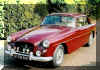 Here is a PRV bodied Bristol 407 (Chassis No. 6028 - PRV Body No. B4863) from
the first batch bodied at PRV between September 1961 and June 1963; it must have been the 28th built after the prototype
that had an Armstrong Siddeley engine. This exquisite example won its class in
2002 and 2009 at the Bristol Owners Club concours and the photograph &
details were kindly supplied by owner Nick Challacombe.
Here is a PRV bodied Bristol 407 (Chassis No. 6028 - PRV Body No. B4863) from
the first batch bodied at PRV between September 1961 and June 1963; it must have been the 28th built after the prototype
that had an Armstrong Siddeley engine. This exquisite example won its class in
2002 and 2009 at the Bristol Owners Club concours and the photograph &
details were kindly supplied by owner Nick Challacombe.
Note: At the time Armstrong-Siddeley and Bristol Cars were both part of
British Aircraft Corporation.
John
Doyle writes:
I can confirm that the Bristol Cars were still being built up to 1975 (at least)
when I left PRV to emigrate to New Zealand. I worked on some aluminium
& other metal parts for the Bristol and helped fit the doors with the two tradesman finishing them
ready for the next stage. I recall the seats being made in the trim shop and fitted
ready for finishing at another factory. The wooden horse was set up at the canal-end of
the panel shop where the bodies were hand made & inspected. I can also
confirm that the Bristol had an 8-cylinder engine and that the spare wheel housing was on the passenger side
to the front of the door.
(The anecdote below, kindly supplied by Brian Ridley-Jones, briefly comments
on some first hand experience of coachbuilding the Bristol 411 at Park Royal.)
Bristol
Cars: A Very British Story by Christopher
Balfour (Author)
This was the last body that Park Royal built for Bristol and I am indebted to Marcel Dupree and George Porter for their memories of 15 years working on Bristol bodyworks.
Marcel was the younger of the two and his task was to build some of the steel inner framework, particularly the front wheel arches and the frames for the boot lid; George joined as an apprentice in the war years and by the time Park Royal took over from Jones Brothers and started on the 407, he was an experienced panel beater. Thirty years on he still remembers how he used to enjoy making the bodies.
He described how the Bristol people (led by Ron Radford) would come to Park Royal and how one of their priorities was to eliminate wind noise.
This meant attention to all seals and, said George, 'I was also responsible for snagging. I had a metal plate to check that the gaps for the doors were uniform and no more than one-eighth of an
inch". This was no production line: the aim was to achieve the highest possible standard with each individual body. Corrosion prevention was another particular concern.
The inner metalwork was carefully painted and a yellow paste, known as Duralac, supplied by Bristol, was put on to the steel before the aluminium was wrapped round.
George remembers a visit to Filton in the lorry with a completed car. On a previous journey a body had been roped too tightly and, without a B pillar (because all the glass was packed inside), the roof had sagged slightly.
It was his task to sort this out. He remained at Park Royal (building buses again) until a year or so before the factory was closed by British Leyland in May 1980, and subsequently worked for a restoration
company.
The
book above Bristol
Cars: A Very British Story by Christopher
Balfour (Author) is out of print but available at specialist bookshops.
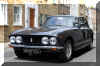 This is another excellent example of a Bristol 411 pictured in 2009.
I
would be pleased to hear of any information that can add to the story of PRV's
association with Bristol Motors, thanks. Ed.

 Pictured here, in excellent
condition, at the 2007 Helston
Motor Show, Cornwall, is a Bristol 411 (Series 3) that was coachbuilt
at Park Royal and dispatched from the Filton factory on the 9th February 1973 bound
for the London dealership. This particular vehicle was once
owned by the actor Trevor Howard who apparently had several of the marque.
Pictured here, in excellent
condition, at the 2007 Helston
Motor Show, Cornwall, is a Bristol 411 (Series 3) that was coachbuilt
at Park Royal and dispatched from the Filton factory on the 9th February 1973 bound
for the London dealership. This particular vehicle was once
owned by the actor Trevor Howard who apparently had several of the marque.
